Wednesday, March 30, 2016

Shrews and Confidence

The Taming of the Shrew


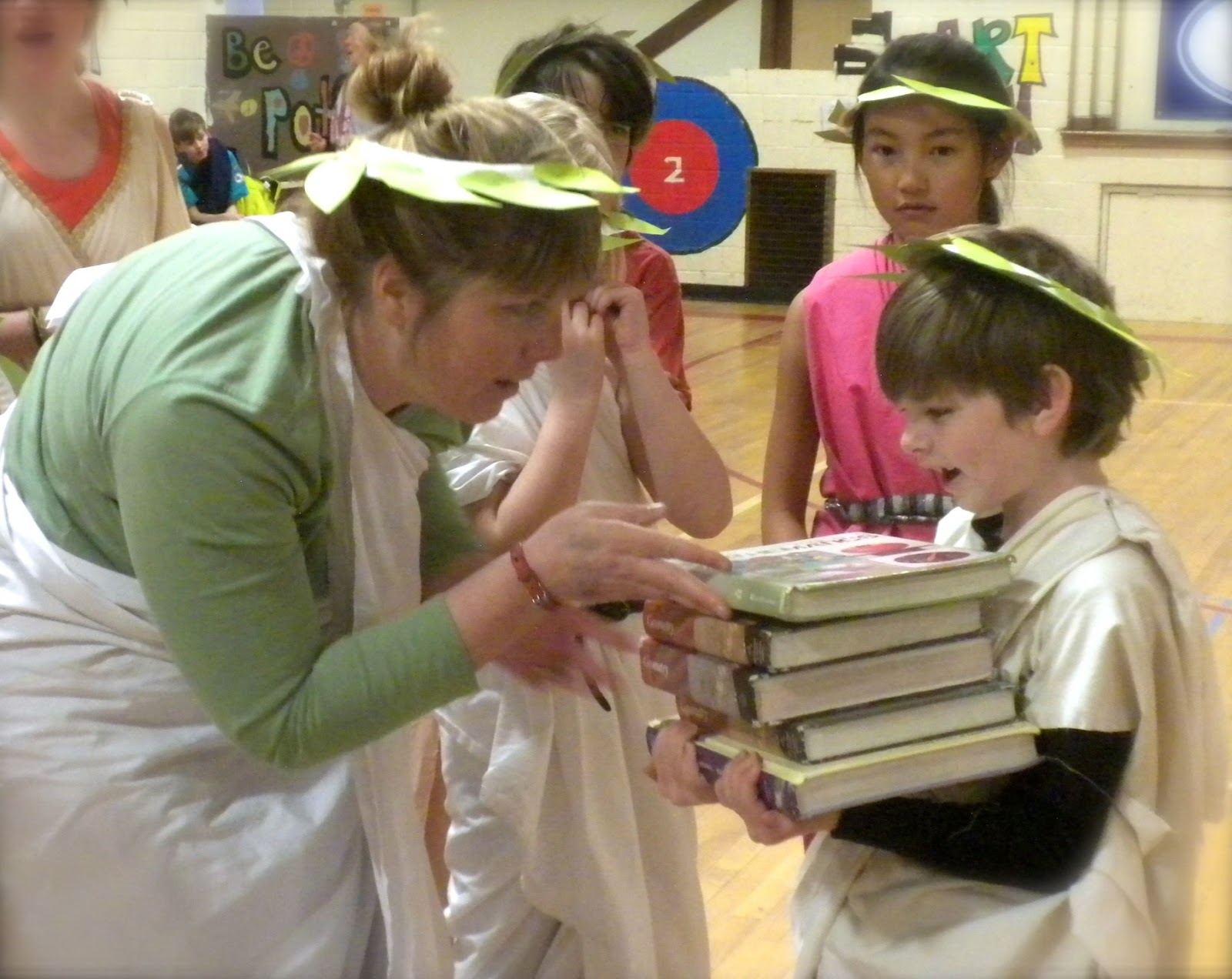
One of the hallmarks of an Emerald education is the development of confidence. There are so many reasons that this is important, ranging from self-advocacy in the near future of high school to the more distant future of success in the workplace. At Emerald, students become confident as they learn to talk honestly with their teachers and parents about their work, as they learn a stringed instrument and stand (or sit) tall as they perform, as they present speeches, and as they perform in plays at all grade levels. The culminating dramatic performance opportunity comes in Middle School, as Emerald’s students perform a Shakespeare play every year. This year, on April 6, our students will perform The Taming of the Shrew at 2:00 and 6:00 p.m. at the Chief Theater. We hope to see you there. Admission is free, yet another way that Emerald’s students give back to the community.

Tuesday, March 29, 2016

Middle School Mentorship Day

Middle School Mentorship Day


This month, Middle School students had defining experiences at local businesses and working with professionals in many different fields. For a day, students stepped out of the classroom and into the workplace. Whether it was shelving books at the bookstore, helping animals at the vet, working at the gas station, or helping other professionals throughout town, students learned what Steamboat businesses are all about. Real life lessons abounded, sometimes sad, but as Shea Pepin says, “Even though some animals were in pain, like the dog that got porcupined, seeing the other animals made me happy.” Not only is Mentorship Day a wonderful opportunity for Emerald students to learn about commerce and other professions, but it is also a way for the students to give back to the community. Emerald’s Middle Schoolers represent the school well, lending a helping hand to their mentors. As Will Scheer pointed out, “It’s interesting to see the business from the other side of the counter.”

The learning doesn’t happen only during the day of Mentorship Day, though. Prior to the actual event, students set up their own placements, reaching out to the mentors and organizing the arrangements. When they return, the students write about their experiences, building their writing skills. And they practice writing business letters (and editing) as they write thank you notes to their mentors. Relationships built during Mentorship Day sometimes find students taking on part-time jobs when they get to high school, all based on their hard work with their mentors when they were at Emerald.


Middle School Move to Emerald

Middle School Move


Kendall Yeager was nine when she faced the prospect of becoming a sixth grader. She had nearly finished the fifth grade curriculum during her fourth grade year at Soda Creek Elementary School. She felt isolated from her classmates and bored. “It got to the point where I wasn’t interested in the work because I didn’t feel challenged,” she said.

The school wanted her to skip a grade. While this may have solved the academic problem, she would have been two years younger than her peers (she had started kindergarten early). Her parents looked at other options and settled on Emerald Mountain School (then Lowell Whitman Primary School), where Kendall enrolled in fifth grade.

The smaller classes and individual attention suited Kendall’s learning style. She was engaged in the work and challenged, particularly in Strings and Spanish. She’d only had a little classroom Spanish and had never played an instrument, but the flexible yet focused environment helped Kendall learn at her own pace. She enjoyed the work, especially in Spanish. “The teachers do a really good job teaching at the level where you are at - not pushing you or holding you back.”

While the academics challenged Kendall, the outdoor education pushed her completely out of her comfort zone. “It’s not super common for a 10-year-old to go camping in Moab without her parents,” she said. Kendall gained new skills and learned the importance of personal responsibility during the trips. The sense of accomplishment she gained was invaluable to her overall experience at the school, which fostered her independence and confidence as an adult.

She graduated from the middle school in 2007 and attended Steamboat Springs High School. Not long after receiving her diploma, she got a job working full time as an executive assistant at the Northwest Colorado Visiting Nurse Association while also pursuing a degree in business administration at Colorado Mountain College. She received her Bachelor of Science degree last year and has been promoted to Development Coordinator at the VNA, handling donor relations and communications, grants management and grant writing.


She’s not sure she would have had the drive to accomplish this — she is now 22 — without the skills she developed at LWPS/Emerald. “It definitely shaped my life and the direction that I’ve gone.” 

Thursday, February 11, 2016

Middle School Outdoor Education Excitement

Middle School Outdoor Education Excitement


Emerald Mountain School kicked-off a new monthly outdoor education program for Middle School students this year. It all began with a day of dog-sledding and survival skills. Students built snow shelters and started fires in adverse conditions in the Flattops. They worked in teams and expanded their abilities to cooperate and learn from each other. Our second trip of the year focused on safety in the back country in winter, especially in avalanche conditions. Beacon training, snowshoeing, and cross country skiing figured prominently, and the students were treated to a surprise visit from a rescue helicopter. Each month, Emerald’s Middle School students have the opportunity to learn about the outdoors IN the outdoors. Aside from just being plain fun, these outdoor expeditions provide learning opportunities related to science, social-emotional development, survival skills, the environment, situational awareness, mindfulness, and working in teams. These monthly outdoor education experiences augment the intensive winter skills training that Emerald Middle School students will engage in during mid-February. For three days, students will camp in rustic conditions and learn to be self-reliant even in the most challenging conditions. The culminating event for our eighth grade students includes a six-hour solo wilderness experience where each student employs the winter survival skills (s)he has learned, practices mindfulness, and builds confidence. Through Emerald’s outdoor education program, students learn about themselves as they learn about the world around them and as each student pushes his or her limits.


Johnny Spillane: Passion for Learning Comes Full Circle


Passion for learning comes full circle


Opportunity. It comes up a lot in conversation with Johnny Spillane about his experience at Emerald Mountain School, both as a former student and, now, parent of a bright-eyed, energetic kindergartener ready for the world of learning. 

Johnny was one of the first students to walk through the doors of the school founded by his mother, Nancy Spillane, more than 20 years ago. He spent seventh and eighth grades here, nurtured by a personalized education that helped him excel academically as he pursued his athletic career in Nordic Combined skiing. 

A hometown Olympic champion, Johnny is also dad to Hadley and Genevieve. When it came time to send Hadley to kindergarten, Johnny and his wife Hilary knew they wanted it to be Emerald Mountain School. "It's been a unique opportunity to watch the school evolve and be able to send her here. It's a great school and, for me, the best option available."

Most notable in Johnny's years at Emerald were the small classes and phenomenal teachers, who allowed him to move at his pace academically and enjoy his favorite subjects, math and science. His education also helped prepare him for the outside world, fostering problem solving and the ability to work well with others. "It gives you the opportunity to succeed. I'm very excited to watch Hadley grow and learn here." 


What Makes Emerald Unique

What Makes Emerald Unique


It’s a great time for education in Steamboat, with multiple choices available at several schools. Steamboat’s newest option, a Montessori school, raises the question of what you will find, uniquely, at Emerald Mountain School.
At Emerald, we inspire passionate learners through personalization, close relationships with subject specialist teachers, and small class sizes. At Emerald you find academic excellence, confident learners, and community involvement and leadership.

Our students are held accountable to the highest academic standards in the country, making more than a year’s worth of progress during each year they attend Emerald. Small classes allow students to learn to advocate for themselves, and public speaking and performance opportunities teach them the communication skills to do so effectively.

The warm and family-like environment at Emerald gives students a sense of belonging which stimulates a desire to reach out and help others in both the school community and the wider Steamboat community.


Emerald & Montessori offer:
·         An alternative to traditional education
·         Mixed age (grade) classrooms
·         A focus on developing passionate lifelong learners


Emerald offers:
·         Structured curriculum: focus on strong academics personalized for each student
·         Child-centered approach to learning: Students find success and are challenged in ALL areas of the curriculum (vs. child-driven approach at Montessori)
·         Smaller class sizes: Emerald classes are capped at 18; 7 to 1 student/teacher ratio
·         Unique programming: art, music (strings), outdoor education
·         Passionate teachers who are subject specialists: teacher-student relationships are nurtured year after year
·         A philosophical emphasis on personal accountability as a member of the greater school, local, and global communities
·         A centralized location in the heart of town since 1993


Friday, April 5, 2013

Emerald Curriculum


A parent recently asked about Emerald’s curriculum, wondering if we follow the much-discussed Common Core Curriculum that is being implemented in the nation’s public schools. This engendered a broader discussion about how Emerald curriculum is developed. The short answer to the question about Common Core is a resounding “no.” Emerald faculty do not follow any published curriculum slavishly. Instead, we have an ongoing curriculum development process during which our faculty investigate and analyze available published curricula, professional standards and benchmarks, and best practices from other schools. At the same time, Emerald faculty keep the children’s developmental trajectories firmly in mind as they consider when it is appropriate to teach a specific skill to a specific child. As new research and theories regarding brain development and functioning become available, our faculty re-examine the teaching strategies they are using in light of research results. Our ERB standardized testing results, which provide us with very detailed information about our children’s growth as well as a comparison between our students and those from other top schools in the country, provide an additional source of information upon which we build curriculum.


Emerald’s faculty think critically about the information and ideas from all of these sources as they work collaboratively to design a curriculum that helps each child grow and learn to the very best of his or her ability. Our experiential program, built around a new theme each year, provides the framework for this curricular investigation. For all of these reasons, Emerald students follow a curriculum that is uniquely Emerald’s and which is built upon the combined knowledge of all of our faculty members. Narratives describing Emerald’s curriculum in various subject areas can be found on the program page of our website, at http://www.emeraldmountainschool.org/#!program/c1ktc. Each year, as we revise, update, and enhance the program, we rewrite our narratives to reflect the learning opportunities we provide for our students. As our faculty work together to develop each year’s plans, they produce “maps” which help them find connections between different subjects within the program as well as providing structure to our own, Emerald-developed, curriculum.


The curriculum at Emerald Mountain School reflects its developers. It is an inspiring, challenging, individualized, experiential, and creative curriculum developed and constantly fine-tuned by faculty who embody those very values.

Friday, May 4, 2012

Generosity

            I recently received a notice from my previous school about the fact that one of the grades had just made it to 100% parent participation in the Annual Fund. This reminded me of how very fortunate our students are to have such strong Annual Fund support from families, alumni, staff, and friends. Our 2011-12 Annual Fund, which supports the ongoing operation and program of the school, was the most successful in our history. We raised over $210,000 and had 100% support from families, staff, and board members. This is a testament to our shared belief that through working together, we can provide the best possible education for our children.

This reflection upon on our Annual Fund campaign came as the LWPS school community was returning from Spring Break to a beautifully updated building, with brand new carpet. The generosity of the Craig-Scheckmans in providing that carpet allowed us to see with new eyes the very special warmth that our uniquely child-centered building provides. As we walk into the classrooms on our new carpet, we see new technology also provided by our families. The Zedecks’ contribution of a SMARTboard has enhanced the Upper Primary math and social science program, and we are preparing for a SMARTboard provided by the Faunces and an anonymous donor that will reap similar benefits in Lower Primary math and language arts classes. As we move forward, we hope to see SMARTboards in all of our classrooms.

The effects of our families’ generosity extend well beyond our bricks and mortar to the people and programs that make our school such a uniquely special place. Many of our families combined resources to meet the Basses’ matching challenge to provide funding for Bonnie, our music assistant, and allow our strings program to be fine-tuned for all of our students regardless of their level. We have new bike racks provided through the generosity of the Knoxes, allowing our students to continue to buck the national trend where only 13% of students walk or bike to school. The Findell donation of the campsite for our Fall Camp Trip, year after year, makes that important kick-off event possible. The Oleskis and Carltons have provided software and other pieces of technology.

The list of the individuals who deserve recognition for their ongoing support goes on and on. Each and every one of our families provides time and energy to our program: within the classroom, within the building, and during our many events like the upcoming Spring Trips. Our children all benefit from the many gifts that our families provide to the school. They also benefit from the culture of philanthropy that is so much a part of their school world at LWPS. As they encounter the magnanimity of the full school community on a daily basis, and as they generously give of their own time and energy both at school and in the community, they are developing into the kind of adults who will make the world a better place, just as their parents and grandparents have.

Friday, April 6, 2012

Transformation

            There’s only one other place I’ve been where the landscape reflects limitless possibilities as it does in the West, and that’s out at sea. Sitting on the bowsprit of a sailing vessel is much like standing at the top of a mountain; the wide-open vista feels like a concrete metaphor for unending options in all directions. Last night at the Bud Werner Memorial Library, as I listened to author Craig Childs share his experiences in some of the most remote locations on Earth, and the exploratory childhood that led him to appreciate the wide-open possibilities they represent, I thought about the ways in which being out on the land can expand the growth of a child. As a child, Childs was always “getting out there and going,” sometimes accompanied by his mother but always encouraged by her. He explored, and his written reflections on those explorations were the precursors to his current writing as a naturalist. Someone asked him how he first got started writing, and he referred to learning letter formation in kindergarten. Childs’ experiences during his early years were what set him up to truly love nature and to be able to communicate that love.


            In Steamboat Springs, there is such an opportunity to experience and explore nature in an active way, just as at Whiteman Primary students have ongoing opportunities to process and write about those experiences. In a recent Chinook class, students looked closely at an aspect of their environment, thought about that aspect as a metaphor for a bigger idea, and wrote essays about that idea. While working on writing skills, they were also honing their critical thinking skills. As our students look forward to their Spring Camp trips, spending time in the outdoors camping, hiking, biking, and observing, they can expect opportunities for journaling and other writing to help them put their experiences into a larger context.


            Our teachers, too, enjoy broadening their views and expanding their learning while they are out in the natural world. Childs talked about his desire to be there for the moment of change – the change in sound precipitation makes on a window as snow turns to rain, the hardening of the ground as lava turned to rock, the visual explosion as dark turns to light – and it is the moment of change in a child that teachers live for. Watching the joy of a child recognizing that printed material has meaning brings joy to a teacher, as does the discussion with a young adolescent about how the movement a school of fish can be seen to represent human behavior. The experiential side of a Whiteman Primary education is full of such magical moments for students, teachers, and parents. I wonder how many of our students will look back to their transformative experiences here in Steamboat Springs as the start of their love of the outdoors and writing?

Friday, March 23, 2012

Moral Development

I recently read in an etiquette blog about how important it is to be nice to everyone, even the receptionist, office manager, or secretary, when on a job interview. After all, this certified etiquette trainer pointed out, you could lose the job if the secretary spoke poorly of your social skills. While the end result of this advice is positive – a concern for others’ feelings regardless of their station in life – the underlying message that being nice is simply a means to an end struck me as severely misguided.

            This raises the question of the real reason we should be kind to the secretary and how we can raise children who will know the answer to that question. In schools and as parents, we are concerned with our children’s moral development as well as their cognitive and athletic development. The earliest stage of moral development revolves around consequences:  will I be punished or rewarded for my behavior? If the former, the behavior must be bad, and if the latter, it must be good. Next comes a stage of utility – does the behavior serve others’ and my interests? This seems to be right on target for our etiquette specialist. As children develop morally, they move beyond what Lawrence Kohlberg calls pre-conventional moral thought, through stages that focus on interpersonal relationships, maintaining social order, respecting social contracts and individual rights, and internalized principles of justice. A child develops a moral and ethical conscience by building his or her own abstract understanding of the complexities of the world in which we live

            The development of moral character is individual work for each child, but it is accomplished within a social framework. If we want to help children make the move from caring only about themselves, we can do so by helping them think more about others’ feelings. Once children have developed the habit of thinking about social relationships, we can help them extend their thinking from individual interactions to broader societal and cultural issues. This happens in so many different ways throughout the school day. A young child who has had an altercation with another child is encouraged to think not about punishment, but about how the other child feels. Students at all ages work on interpersonal relationships during our Morning Meeting, and we often touch on social justice issues and cultural awareness in our social science classes. Throughout the history of our school, we have taken pride in how the adults in the school model thoughtfulness toward one another and toward students…and ask the Upper Primary students to practice and to do the same.

            It is our hope that our children would demonstrate their agreement with the etiquette specialist by being kind to the secretary when on a job interview. However, our goal is that the students would be kind not just because the secretary may have an impact on whether they would get the job, but because it is the right thing to do.

Saturday, March 10, 2012

Anonymity

                Steamboat Springs is not the first small town in which I’ve lived, nor is it the most remote. However, it is the warmest (at least figuratively). I found myself ruminating about why that is as I listened to C. J. Box, Western mystery writer, last night at the first ever Spring Author’s Series at the Bud Werner Memorial Library. He shared details with a packed house about how he builds his books around the lack of anonymity that exists in small towns in the West. His writing tends to focus on the impact on social interactions that comes from knowing that the fellow citizen with whom you may disagree vehemently at the City Council meeting is the same neighbor who you will run into at the next social function you attend. Box’s books are, of course, based on how that small town closeness affects a murder investigation, while I’m much more interested in how our small town makes our community more civil. He discussed the lack of anonymity that small size engenders, while I think about the sense of belonging it promotes.

                A small school like Whiteman Primary can be seen as a microcosm of a small community like Steamboat Springs. In the same way that meeting other community members in a variety of contexts helps us to know them better, respect their opinions, and honor their differences, the increased opportunities to meet and interact with the other students in a variety of contexts allow our children to learn to appreciate one another. Of course, children are not going to be friends with every other child, just as not all members of the broader community will find pleasure in each other’s company, but the lesson that is learned in a small town or school environment is that being civil and respectful is key. The social habits that our town and our school develop in our children will stay with them and serve them well as they move out into the world as adults, regardless of the size of the setting in which they end up.

                My first experience in a small town in rural New Hampshire many, many years ago was jarring to my suburban world view. As I opened a bank account in my well-practiced business-honed Boston-bred aggressive manner, I noticed the shock and concern that the bank clerk seemed to be experiencing. Looking back at what was for me a life-changing interaction, I realize that it was exactly the anonymity Box referred to that had me viewing the bank clerk as a “function” rather than a “person.”  While some may bemoan the fact that they can’t escape the eyes of their neighbors in a small town like Steamboat Springs, or of their teachers and other students in a small school like Whiteman Primary, the net result of the smallness is a personal sense of warmth, comfort, and belonging. This is a tremendous gift that we all share here, and it’s one that we are fortunate to be able to give to our children and to the wider world they will someday lead.

Friday, March 2, 2012

Fate & Empathy

Reading the newspaper reminds us that fate can deal us wonderful things…and it can deal us disasters. In today’s world, where society honors the Horatio Alger, “pulling ourselves up by our bootstraps,” kind of success, it can be easy to believe that the guy next to us who seems so unlucky really just didn’t try hard enough. The news, the Internet, and just common lore love a story of triumphing over adversity. But just how much adversity is too much to overcome?

            Our Upper Primary students are engaged in a simulation of the colonization of America, and they are learning “firsthand” how fate can deal some insurmountable hurdles. As students work in teams to get their ships across the Atlantic and safely landed in the new world, they are learning many things beyond the history of colonization. Making decisions as a group is an important skill they practice as they plan their journey. What food and materials do they need to bring on their trip and what is the best way to pack it to reduce the risk of losing it? What if an illness breaks out in the confined quarters of the ship? How will they handle sanitation? If the weather becomes dangerous, what to do? What if they lose some of their provisions when a ship goes down? How can they save members of their group who were on that foundering ship?

            These may all seem like far-fetched problems for the students to deal with, but in fact they are closer to home than is obvious at first. These same students just returned from a winter skills trip into the cold, snowy backcountry. During that trip, they faced similar questions about how to remain safe both individually and as a group in treacherous conditions. Packing and planning were key skills they built, as was collaboration. Instead of figuring out how to help a drowning team member, the students learned how to help one who was caught in an avalanche. Rather than transporting their food on ships through the ocean, they worked to pull the food on sleds through the snow. But just as the pilgrims struggled with the exigencies of colonizing the new world, the students struggled with how to live “off the grid” in the backcountry of Colorado in unpredictable winter weather

            Fate dealt the colonists many tough cards, and though our students managed to avoid any tragedies on their winter skills trip, they did experience firsthand some of the struggles of being away from the everyday support of our modern society. As the student simulation continues, and fate cards arrive with news that may completely destroy the very best efforts of a team, an important lesson is that no matter how hard we try and with what good intentions we go forth into the world, problems can happen that don’t always end in a happy conclusion. The news reminds us that the homeless family sitting next to us may be approaching the problems they encounter as bravely as our own backcountry expeditionaries or even those rugged and determined colonists. Through opportunities like the winter skills trip and the colonial simulation, we help our children be as well prepared as possible for tough situations, but we also want them to learn to be empathetic toward those who have been dealt one disastrous fate card too many.

Friday, February 17, 2012

Where Is the Candy?

            Where is candy on the food pyramid? As you probably know, it’s not even on the chart. In spite of recent statewide discussions regarding whether candy can be considered food, doctors and dentists everywhere agree that candy is not good for our children. Too much sugar has been shown to be a contributor to child obesity, linked to childhood behavioral problems including an inability to focus, a contributing factor to childhood diabetes, and connected with dental decay. A recent study even found a link between childhood consumption of candy and adult criminal behavior (http://www.time.com/time/health/article/0,8599,1927347,00.html). You probably have experienced situations in which you’ve seen sugar’s effects on your child or other children: the jitters or a lessening of the ability to concentrate, and/or the crash that comes when the burst of energy wears off.

            Our recent celebration of Valentine’s Day, a holiday when candy is romanticized and seen by some as a birthright, presented challenges to adults who are faced with helping children make responsible decisions about what they consume. This is true even though candy had no role to play in the origins of Valentine’s Day, though love and notes did. St. Valentine was martyred in the early days of Christianity for performing the marriage ceremony for lovers. He received notes from the lovers he married, and even wrote his own love notes to the daughter of his jailer. At school, we celebrated Valentine’s Day with cards to our friends and with beautifully decorated lockers in the spirit of love notes from parents to their children.

            Throughout the day, as every day, candy was avoided. By resisting the temptation to pass along an unhealthy tradition instituted by candy manufacturers, parents demonstrated to their children their love and concern. By not including candy in the locker decorations, parents helped their own children and others avoid the temptation to plunder the works of art that the lockers had become. The day was a very special one for the students, with the excitement of entering a school full of Valentine’s Day artwork designed especially for them by their parents, sharing their and their teachers’ creative red and pink clothing options, and passing cards to friends and big/little sisters/brothers. Candy didn’t seem to be missed at all!

            We continue to look for ways to encourage children to eat healthy snacks and meals. These efforts are explicit in direct classroom lessons as, for instance, the Navajos had a recent guest speaker on dental health: Shelley Parsons from Pine Grove Dental. They are also implicit, as faculty and staff model eating healthy meals and snacks when they dine with the children. With school meals, we strive to provide a nutritious lunch with fruit rather than candy as a sweet element. And, as our Valentine’s Day celebrations reminded us, we help parents respond to their children’s media-fueled desires for candy by banning it from the school. Society will do its best to encourage children to eat unhealthily, but as parents and the school work together we can be successful in resisting that push and in keeping our children healthy.

Friday, February 10, 2012

Tradition and Change

            As Whiteman Primary prepares for a new SMART board, we find ourselves sorting through materials that have been in place long enough to have a fuzzy patina of dust, as well as those that have been added much more recently. Faculty have found treasures that have escaped their notice (e.g., a Denver Post newspaper from 1963 about the Kennedy assassination), as well as some materials that are no longer useful (e.g., a Betamax video that had somehow managed to hide away with the VCR tapes). Taking a close look at the things we give precious space to in a cozy school like ours and determining whether we truly hold those things dear is a valuable exercise.

            As we get ready to install the SMART board, we are reminded of how technology can enhance learning opportunities for students while reducing the clutter of maintaining paper copies of lessons, pictures, and other materials. A lesson on an interactive whiteboard allows the teacher to scan and consolidate text and images that once had to be stored on paper in files, often becoming dog-eared, faded, and useless over time. Once stored in an interactive lesson, these materials remain clean and fresh to be reused over many years. Internet resources such as video clips can be seamlessly inserted into the interactive lesson, avoiding the need for physical video storage and eliminating time for transitions from paper to video in the classroom. Lessons can be saved from year to year and tweaked electronically to meet the needs of each rising class, reducing the need for filing cabinets full of old lesson plans. Students can have access to SMART board lessons after they have taken place, providing wonderful review opportunities. As an interactive whiteboard, the SMART board bridges the gap from concrete to representational thinking, as students are able to move “materials” represented on the screen (whiteboard) in much the same way they have been able to move concrete materials on their desks. This means that, at least for older students, the need for storage of concrete manipulatives is reduced.

            Not only does the SMART board help with storing information and materials and with teaching lessons, but it also provides a means for students to personalize their own whiteboard presentations. Students will be able to leave their own proud marks for later reference and as a means of passing down what they have learned and experienced to future classes.

            Technology doesn’t always make things easier or neater. We find this each day as we sit down to our computers and see the amount of email that has accumulated since last we checked. However, there are some technological advances that make education both more exciting and efficient, and the interactive whiteboard is one of those. The school is grateful to David and Gina Zedeck for their donation of a SMART board as a seed for future donations of additional boards for our other classrooms. We look forward to hearing your ideas and viewpoints during our demonstration event once the board is installed and operational. Watch for details in the coming weeks and months.


Friday, February 3, 2012

Math for All

Recently, an old friend, colleague, and philanthropist from New York, who is funding a new urban independent school for disadvantaged children, asked me to advise her about an appropriate math program. She plans to have the school be a showcase for mathematics education, especially for children who don’t have the advantage of rich mathematical experiences at home with their families. My first thoughts were about whether a stellar math program is different in that context than it is in a context which, like ours, includes significant parent support. We want all of our children, whether they are from rural or urban settings, advantaged or disadvantaged backgrounds, or fall along other continuums, to be productive contributors and leaders in the 21st century world they will encounter after school. The skills emerging adults will need to be successful members of our increasingly global society won’t be different because of their backgrounds.

            So what are those essential mathematical skills, and how are they best taught? Over the first five years of math instruction (K-4), the two most important emphases of a mathematics program are (1) basic computation skills in all four operations, including automaticity with math facts, and (2) an underlying conceptual understanding of how numbers are put together. Using these two things together, a student can figure out how to do most everything else. The first provides the skills so that children don’t need to spend precious intellectual energy on these basics as they are trying to learn the more difficult applications of them. The latter is essential to mathematical reasoning. These two things should be learned at the same time, since they give the child a reason (#2) for learning the “boring stuff” (#1). Learning in context is always better than learning in a vacuum, as it provides a structure for students to hang their new knowledge upon. Many programs focus only on basic computational skills, supposing that children can’t start thinking about mathematics before they know how to compute, and these programs do a disservice to children. The students may become great computers, but they have missed the opportunity to make critical connections during the developmental period when their brains are most malleable.

If students have had a strong program that integrates these two aspects of math education during the early years, they will be able to move to a more traditional program (pre-algebra, algebra, geometry, etc.) in the Upper Primary or Middle School years. This upper level math program should focus on applications. Again, learning without context is less efficient, not to mention less interesting. Just as in the Lower Primary program, conceptual understanding is essential. We certainly encounter students who need to learn procedurally, but the goal is always to move them from applying procedures to applying their minds.

Regardless of their backgrounds, as our students leave school to become members of adult society, they will need to do just that – apply their minds. We cannot know what specific procedures they might need for the jobs of the future. But we can arm our students with the ability to figure out what procedures are needed, based upon an underlying conceptual knowledge and skills base. We give our children a gift as we help them build that base – we give society a gift as we send our strong young mathematicians out into the world.


Friday, January 27, 2012

Safety

Our visit today from the Ski Patrol to help us all learn about safety in avalanche conditions prompted me to think about the broader issue of safety in our children’s lives. Here in Steamboat, we and our children are very involved in outdoor activities, some of which carry inherent risks. We cannot help but be tuned in to physical safety as we ski, snowshoe, and snowmobile in the winter and as we hike, bike, and swim in the summer. At Whiteman Primary, faculty, parents, and students talk about and engage in safe practices as they hike and swim at the fall camp trip. The Winter Skills trip and our spring trips provide further opportunities for students to learn, share experiences, and teach others about how to be safe in the wild. The newspaper reminds us to pack our cars with winter safety kits, as it shares news about the tragedies that can befall those in treacherous conditions and those who were not prepared.

Keeping ourselves and our children safe extends beyond trips and outside activities to our homes and school. At school we have fire drills, and the students learn directly from the Steamboat Fire Department how to be safe if there is a fire at home. Children take those lessons home and share what they’ve learned with their parents. This same experience of using the lessons from school to make a change at home is something I remember from my own childhood. I vividly recall asking my father to take me to a marine store to buy a very thick rope which we then tied to my bedframe so that I could escape from my second story bedroom in case of a fire —just knowing that rope was there made me feel so much safer. One of our parents recently shared how proud she was of her kindergarten-age daughter for coming home and helping the family plan safe routes from the house. Good job, Tinsley!

But safety extends beyond the physical, and as parents and teachers we are equally concerned with emotional safety. As Maslow’s Hierarchy of Needs reminds us, once our physical needs are met, the need for safety is the most basic (http://www.abraham-maslow.com/m_motivation/Hierarchy_of_Needs.asp). The old adage, “Sticks and stones may break my bones, but words will never hurt me,” resonates with many of us from older generations. But we also remember that even while reciting this, possibly out loud, we were actually hurting inside from other children’s words. At school, we discuss with students how to use their words and actions to bolster others’ feelings, and we help them use the inevitable mistakes they make as learning experiences.

Just as our children will suffer physical hurts and recover, they will suffer emotional pain that if understood well enough will help them grow into strong adults. In the same way that we arm children with skills to avoid and deal with physical harm, we need to explicitly prepare them for the emotional harm they will encounter. Sometimes that harm will be accidental (a fall or an unkind “foot in mouth” word), and sometimes that harm will be intentional (a push or a mean-spirited comment), but in all cases, it is our hope that our children will be resilient, will learn to understand why the hurt happened, and will fully recover. We can help our children take measures to avoid pain, and we can help them use each painful experience they encounter to learn better ways to keep themselves safe. Since we cannot be with our children at every single moment of every day, our teaching them the skills to protect themselves is essential to keeping them safe both physically and emotionally.

Friday, January 20, 2012

A Mission

We’re a bit more than half-way through the first month of January, and it’s a great time to think back to our resolutions and our progress along the way. We’re also nearly half-way through the year for Whiteman Primary. Our Upper Primary students are receiving their mid-trimester reports and thinking about what they’ve accomplished and what progress is still necessary to get them where they want to be at the end of the trimester. The school is finishing its 19th year and heading into its second decade, and it’s a time for us to review our mission statement to see if it still provides proper guidance for the school’s direction.

We all live with goals, and to the extent that we can keep our “eye on the prize,” we find ourselves able to grow and become the people we want to be. Without goals, we struggle to find a reason to get up each morning. With goals, we find a way to make it through even the hardest day. This is why students start the year with identifying their hopes and dreams for the year, and why they ask themselves each week how they’ve done meeting their own and their teachers’ expectations. Faculty do the same, setting goals at the start of the year, examining their progress toward their goals midway through the year, and reflecting upon their work within the classroom on an ongoing basis.

A school’s goals are embodied in its mission, and Whiteman Primary has spent the first part of this year revisiting its identity to ensure that the goals that are central to the school are best represented in the mission statement. Our new mission statement describes both the love of learning we hope to develop in our students as well as the way we work toward that goal. As you read our new mission statement, you will understand what our school is all about:

“We inspire confidence and a passion for learning through a curriculum that stresses academics, personal accountability, experiential and outdoor education, and responsible local and global citizenship. We provide a creative environment that includes multi-age and socio-economically diverse classrooms, low student-teacher ratios, and active parent participation.”

Each of us should have a mission that gives us purpose, just as each school needs a mission to guide its direction. Our school’s mission guides the school as a whole, our faculty’s goals provide guidance for each classroom, and our students’ hopes and dreams give them motivation. As we move into 2012, what gives you direction and motivates you to follow it?

Friday, January 6, 2012

The Pleasures of a Good Book

          Winter Break gave me some time to do one of my favorite things – read! I hope that all of you were able to take advantage of the holiday season to read some things that you really enjoy. Whether we are students in school or parents at work, we read all the time. It’s a part of what makes us human – that ability to read. I remember as a child reading everything that passed across my eyes. The cereal box in the morning, assembly directions that my dad refused to read, those funny “do not remove under penalty of law” labels on pillows…absolutely anything with words on it. As a parent, I remember the days when my daughter was first learning to read. The wonder on her face as she found that she could read the signs on the walls in the airport while we were waiting for her father to arrive home from a trip brought tears to my eyes. The beauty of reading was, and remains, something very special in my life.

            But I also remember the arguments I had with my daughter when, as a teenager, she insisted upon reading Stephen King above all else. We all have our guilty pleasures (mysteries are mine), but I just could not understand how Rebecca would want to read Stephen King when so many wonderful classics were at her fingertips. It took me a long time before I realized that reading for pleasure requires that it be pleasurable! It seems so self-evident, and yet I struggled with wanting to guide my daughter to “good literature,” refusing somehow to see that reading – reading anything – was building her vocabulary, developing her understanding of syntax, helping her develop the “ear” for how proper language works, and yes, providing pleasure. It was also giving her a common experience to share with other adolescents, even if she shared little in “real life.” She learned how to discuss fiction, and by extension literature, through talking about these fantasy/horror novels.

            As we sit down to read a book or magazine that interests us, it’s like slipping our feet into a set of warm and comfortable slippers. We sit in our living rooms with a good book, and we can be hundreds or thousands of miles away, making contact with environments, cultures, history, science, music, and people we would never otherwise have the opportunity to meet. Our minds are exercised and expanded, our verbal skills become stronger, our ability to concentrate is reinforced, and we find ourselves able to leave our troubles behind. All of this is true regardless of the genre or the literary noteworthiness of our reading material. What matters is that we love what we read.

            I hope that the type of reading material that appeals to you surrounded you during break, and I especially hope that was true for your children. As you look to 2012, talk with your children about the books that appeal to them and then be sure to provide an environment that is rich in that sort of book. At school, your children will have many opportunities to experience new genres and will read things that stretch them beyond their comfort zones. Be sure that at home they have the chance to slip those warm comfortable reading slippers on and relax into a good book. And don’t forget to do the same yourself from time to time.

Friday, December 2, 2011

Parents in the School

Whiteman Primary is a great place for kids…and it’s a great place for adults, as well. It is refreshing to see the parent-child, parent-faculty, and parent-parent interactions taking place throughout the school and throughout the day. In a society where “helicopter parent” is a common derogatory phrase, it remains a term not heard within the walls of LWPS.  In fact, parental involvement in every aspect of our school is a big part of our mission.

You might question why a school intent on educating children finds parent participation to be so integral to its day-to-day life. Children everywhere learn more from observing the adults around them than they learn from what the adults tell them. The fact that their parents play a key role at Whiteman Primary teaches our students that education is something their parents value. The civility and kindness with which parents interact with each other and with the children of the school teaches those children how to be a part of a respectful community. The close collaboration between parents and faculty teaches our students the value of teamwork.

Parents play many roles at LWPS, and the importance that is placed upon all of those roles teaches the children to appreciate diversity. We all contribute to the school in different ways, but all of our contributions are important. For the students, this translates into an understanding that while some students bring a strong facility with language to the classroom, others bring great mathematical skills, and still others bring a social-emotional awareness that makes the classroom sing with accomplishment.

Having parents deeply involved in their children’s learning in the school enhances the students’ learning in ways that are both obvious and subtle. This connection between all of the members of the school community, both young and older, is one of the things that resonates throughout the halls and classrooms of our school and transform it into a home away from home. It is one of the ways in which being a part of the LWPS community is very special. It is something that I appreciate every minute of every day, and that I hope all of you have a chance to experience. The fact that our children are immersed in this cooperative environment daily deeply enriches their education.

Friday, November 18, 2011

Musical Presence

            Music soothes the savage beast. It calms us when we are anxious and excites us when we are low. It gives voice to our feelings while transporting our minds to places, both real and imaginary, where our bodies could never go. It helps us understand other cultures and provides a voice to those who are less eloquent in words, while enhancing the eloquence of even the most profound words. Especially in Steamboat, you can’t avoid noticing how music brings us together as it builds in each individual musician an understanding of community and teamwork. The discipline involved in learning music, beginning with the challenges and failures that can be associated with every new piece, teaches a resolve that proves over and over again that practice and dedication will bring success. Learning music is a perfect metaphor for learning anything. Think about how the structures in music can help us apply and understand the beauty of mathematics. For all these reasons and more, music is an integral part of the Whiteman Primary program, and walking into the school today you will be unable to avoid its presence.

            Each day, as we enter the school, we are serenaded by students taking strings lessons in the library. The bookended day, with more lessons happening after school hours, is filled with music classes, practice in the halls, students gathering their instruments and music stands, and perhaps most impressively, students singing and humming the songs they have played in music class. Our mascot Chester has even gotten into the act (stop by, he will be only too happy to demonstrate his unique talent).        

              Music extends outside of the school walls, too, as students share their talents and their love of good music with other members of the Steamboat community. Yesterday, our eighth grade strings group, Five Below, played holiday music at the Tread of the Pioneers museum in a concert for Steamboat’s senior citizens. The magical setting of the museum full of glorious Christmas trees was a perfect backdrop for the eighth graders to bring beautiful music to the community. Another opportunity to enjoy the fruits of LWPS students’ musical accomplishments occurs when a student completes one of the Suzuki books. The tradition of the family hosting a recital is one that brings the community of students, parents, guests, and faculty together to celebrate the musical accomplishments of the child. I’ve had the pleasure of attending two of these recitals so far this year, one just this week. These are very special moments when the warmth of our community is enhanced by the beauty of the students’ performance.

            The entire school is preparing for the Winter Showcase, which will be an opportunity for all Whiteman Primary students to celebrate the holidays through the creation of music, and for the entire LWPS community to be transported into the holiday season. This year, we will hold the Showcase in St. Paul’s Episcopal Church so that members of the wider Steamboat community can join us. LWPS students are fortunate to be a part of a wonderful musical tradition, and it is in the spirit of the holidays that they share the fruits of that good fortune with the community. Please join us on December 16 at 11:00 a.m.